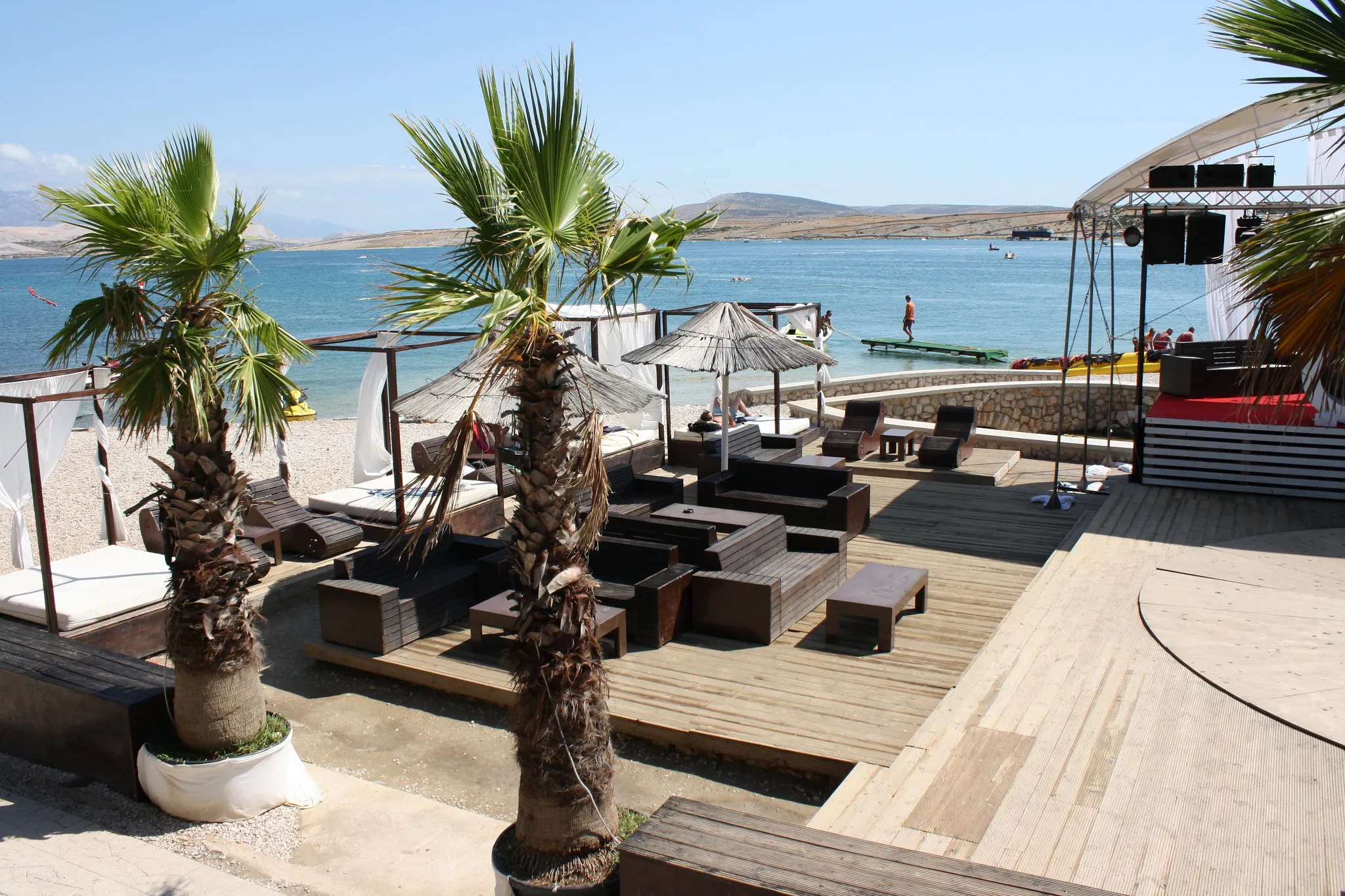
While dozens of books chronicle Ibiza’s clubbing history, little has been written about Europe’s second-best-known party destination: Zrće beach. Every clubbing enthusiast has heard about Zrće. Your favourite DJ has probably played there on multiple occasions. It is a home of numerous clubs and festivals featured in DJ Mag’s Top 100 lists. But how did this relatively unknown beach on a remote island in Croatia become such an iconic party destination?
A (very brief) history of the Pag island
Zrće beach is located on the island of Pag (Croatia’s 5th largest island), north of Zadar (Croatia’s 5th largest city). Despite its large area, the island is sparsely populated, with a permanent population of less than 10k people.
The island is located mere 300 meters away from the mainland. In Roman times, a settlement was formed, named Navalia (modern-day Novalja), and its beaches were home to shipbuilders and ship repair businesses on their route to Zadar.
Skipping ahead about 1500 years, a key moment in island’s history happened in 1968, with the construction of a 300 meter long bridge connecting the south of the island to the mainland. No longer was Pag only reachable by a boat like it was for thousands of years, now you can simply drive there.
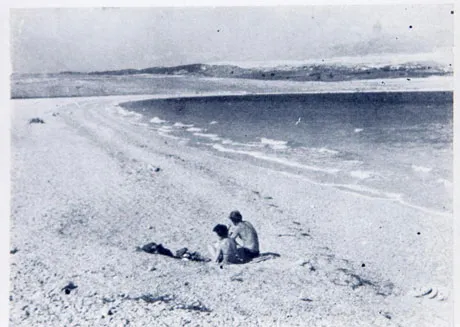
Following the construction of the bridge, the first tourists started exploring the beach across ’70s and ‘80s.
Kalypso, Zrće’s oldest beach bar
Kalypso (pictured above) opened all the way back in 1987. It served a fundamental role in putting Zrće on everyone’s party map, but it did not start with that intention in mind. In the words of its founder, Boris Šuljić:
In 1987, Kalypso consisted only of dry-stone low walls that my father and I had built by hand, along with some kind of kiosk we had set up there. Of course, I wasn’t some 24-year-old visionary who foresaw what Zrće beach would become. In its first year, the bar didn’t even operate at night. We changed that the following year, but even then Kalypso didn’t have a dance floor or a DJ, it was us who played music for the guests.
After a few modest years of operation, hardships began as the war in Croatia (1991-1995) took its toll. However, Kalypso got its first 15 minutes of fame before the war was even over. In 1994, Ivana Banfić, a Croatian singer that played a fundamental role in the rise of dance music in Croatia, released her summer hit “Šumica” (Croatian for “small forest”), whose music video was filmed entirely in Kalypso:
With the rise of dance music in Croatia throughout the 1990s, Kalypso and Zrće as a whole started gaining reputation amongst the locals and tourists from neighbouring Slovenia. For 15 years, Kalypso was the only bar available on Zrće. In 2002, that was all about to change.
Papaya and Aquarius
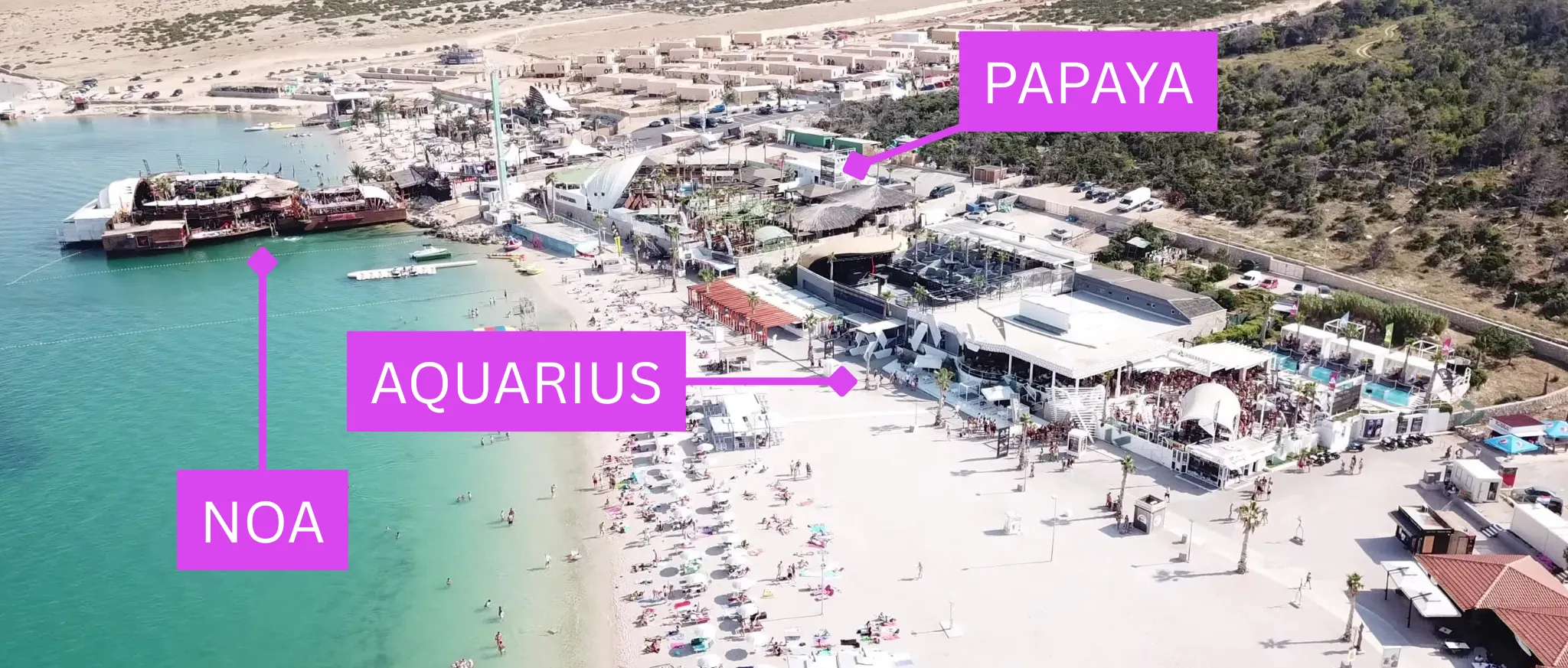
Papaya and Aquarius are kinda like twins: not only are they located right next to each other on the opposite side of the Zrće beach from Kalypso, but they both opened around the same time (2001-2002). Together, the three clubs engaged in a sort of a friendly competition towards the common goal of building up the beach into what is to become Croatian Ibiza. A new tradition emerged, in which tourists enjoyed the beach during the day, and then went to one of the two newly-opened clubs, where so-called “after beach” parties started at 5pm.
By this point, clubs did a really good job at getting a lot of young people inside, but what they struggled with was getting those people to spend more money. Most of the guests were far more interested in flirting with each other than they were interested in getting wasted, which lead to the owners frequently complaining about low drink sales. Then they were hit with an even bigger problem: Zrće’s reputation.
Early controversies
These early successes also lead to criticism of the more conservative part of the local population. Most notably, a weekly newspaper in Croatia wrote an article about Zrće in 2004. The article referred to the beach as the “Pag’s Sodom and Gomorrah”, calling it an “oasis of sex, drugs, and alcohol”. The article featured a photo of a guy dancing with two women, which subsequently lead to him getting fired from his job. It also talked about an incident where a young couple was having sex out in the open at 7am, which further disturbed the local population.
By this point, the owners of the three clubs have spent years building up the reputation of the beach, and the release of this article infuriated them. But as the saying goes, any advertising is good advertising. This publicity hit brought some sort of mistique to the area, attracting more and more young people to see for themselves what all the fuss was about.
Rise to fame (2005-2010)
In 2005, Papaya was the home of Zrće’s first ever festival: Papaya Day&Night Summer Festival. In its inaugural year, the festival was opened by none other than the house music legend Marshall Jefferson.
Every subsequent year, the three clubs needed to raise the bar even higher to entice the crowd to come back the next year. This desire to go bigger and bigger lead to club owners taking out a bank loan at the beginning of the season to be able to afford lineups they were bringing, and then paying the loans back at the end of the season.
By 2007, Papaya hosted the likes of The Shapeshifters and Freemasons, but what truly cemented its reputation was the performance of Tiësto in 2008. At the time, Tiësto was voted as the top DJ in the world for three consecutive years, which made his performance on this little remote beach in Croatia a very big deal. The likes of BBC Radio 1 and DJ Mag started paying attention.
By 2009, Armin van Buuren, Paul van Dyk, Swedish House Mafia, Eric Prydz, Pete Tong, and Mark Knight were all performing there, cementing Zrće as a party destination internationally.
Noa Beach Club
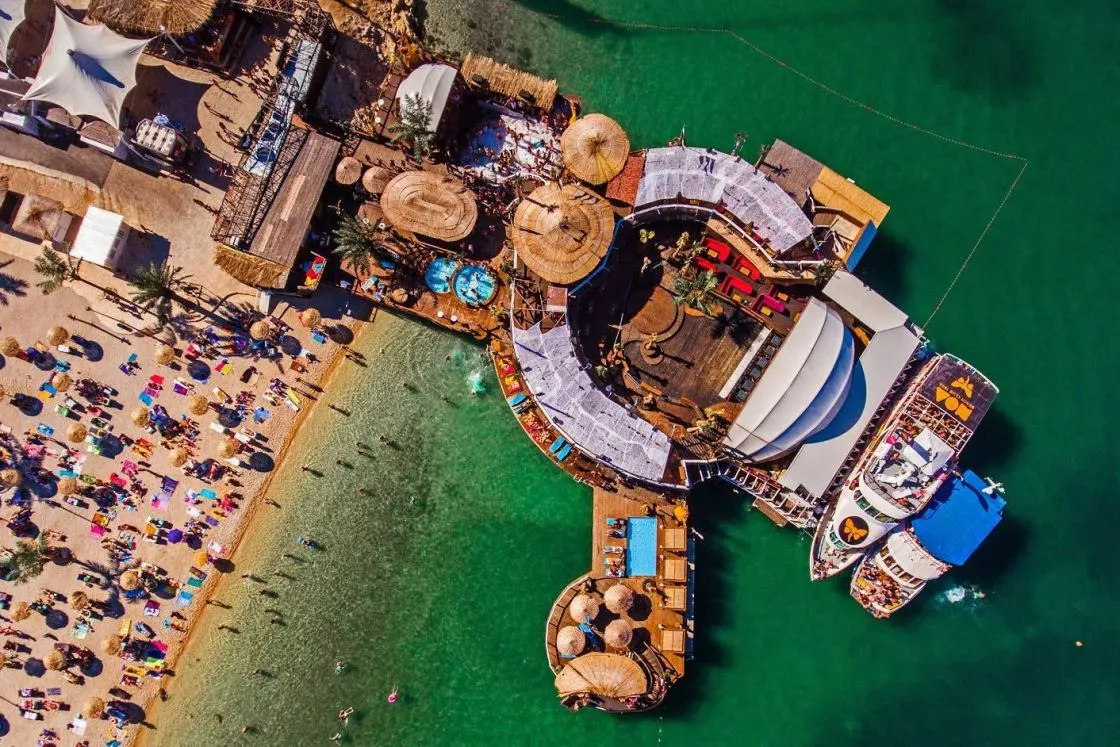
Noa Beach Club opened as Zrće’s fourth club in 2011. Except, it’s not really on the beach, but on top of a 2000 square meter wooden structure extending into the sea. From its inception, Noa tried to set itself apart from the other three venues by embracing more luxurious aesthetics. Instead of dipping into the pool next to the sea, when you’re in Noa, you dip directly into the sea.
Despite being located mere meters away from Papaya and Aquarius, it is the first club that doesn’t belong within Novalja’s jurisdiction, but to the nearby town of Komin. By 2015, it was responsible for half of the entire municipality’s budget, however this story doesn’t come with a happy ending.
At the peak of its fame, after it reached the #10 spot on DJ Mag’s top 100 club list
The explosion of festivals
In the early 2010s, many now-famous festivals started taking roots in Zrće, with some combination of the four nightclubs acting as venues. This grouping of events into multi-day festivals allowed the beach to adapt to different tourist nationalities. For example, the beach could be full of Brits in July, so you book a bunch of English DJs then, while Italians might come later in the season. Meanwhile, the beach is full of German-speaking tourists pretty much all season, so you sprinkle German DJs across the calendar — you get the idea.
Nowadays, there’s more than a dozen festivals happening in Zrće each summer, sometimes simultaneously. As an example, one festival could be taking place in Noa and Papaya, while another was taking place in Aquarius and Kalypso. Out of top 100 festivals in the world (according to DJ Mag), 9 of them are in Croatia, with the three highest rated ones being Sonus Festival (#35, Zrće), Ultra Europe (#37, Split), and Hideout Festival (#41, Zrće).
Both Sonus and Hideout had their inaugural year in 2011. In subsequent years, they grew from a few thousand attendees to tens of thousands, more than the entire population of the island.
Traditionally, these festivals are rarely only a weekend long. They usually start in the middle of the week (preferably on Wednesday) in order to entice people to extend their stay in Zrće beyond just one weekend.
Kalypso as the oldest of the four was starting to fall a little behind the other three, and it was obvious that major changes were needed. In 2015, it underwent a transformation, in which it was completely demolished and rebuilt from scratch into a more modern venue.
Concession controversies
In 2017, the entire beach was put up for concession, which lead to several controversies. The first controversy was related to the duration of the concession agreement, which increased from 10 to 20 years mid-process. The second controversy was that the consortium representing the owners of all four of Zrće’s clubs (Kalypso, Papaya, Aquarius and Noa) ultimately losing the bid.
Finally, the city of Novalja and Gospić (as the capital of the county) had different views of what the beach should look like, which caused even the winning bidders to complain about the local administration of Novalja preventing them from using the beach to its potential.
Recent development
- In 2019, Aquarius got sold to the winners of the concession bid. One of its former stages transformed into a more sophisticated restaurant called Nomad, which caters to the more mature crowds with its 2-hour-long cabaret shows each evening, while other parts of Aquarius continued its clubbing legacy.
- In 2020, a new development plan was adopted by Novalja’s local administration that aims to make the area more attractive to other age groups as well.
- By 2022, the beach started recovering from the pandemic decline, and by 2023 most of the festivals were back to where they started.
Zrće now
If 2020 taught Zrće anything, it was that silence doesn’t suit it. One popular newspaper in Croatia went there in early July of 2020 and counted a total of 30 people at the beach, which was completely unthinkable for the past 50 or so years. But by 2022, things were back to the usual, with various festivals returning to their former glory.
DJ Mag’s Top 100 nightclubs list:
- Noa Beach Club: #10 in 2025
- Papaya: #21 in 2025
- Kalypso
- Aquarius: #70 in 2025
DJ Mag’s Top 100 festivals:
- Sonus Festival (#35 in 2024)
- Hideout Festival (#41 in 2024)