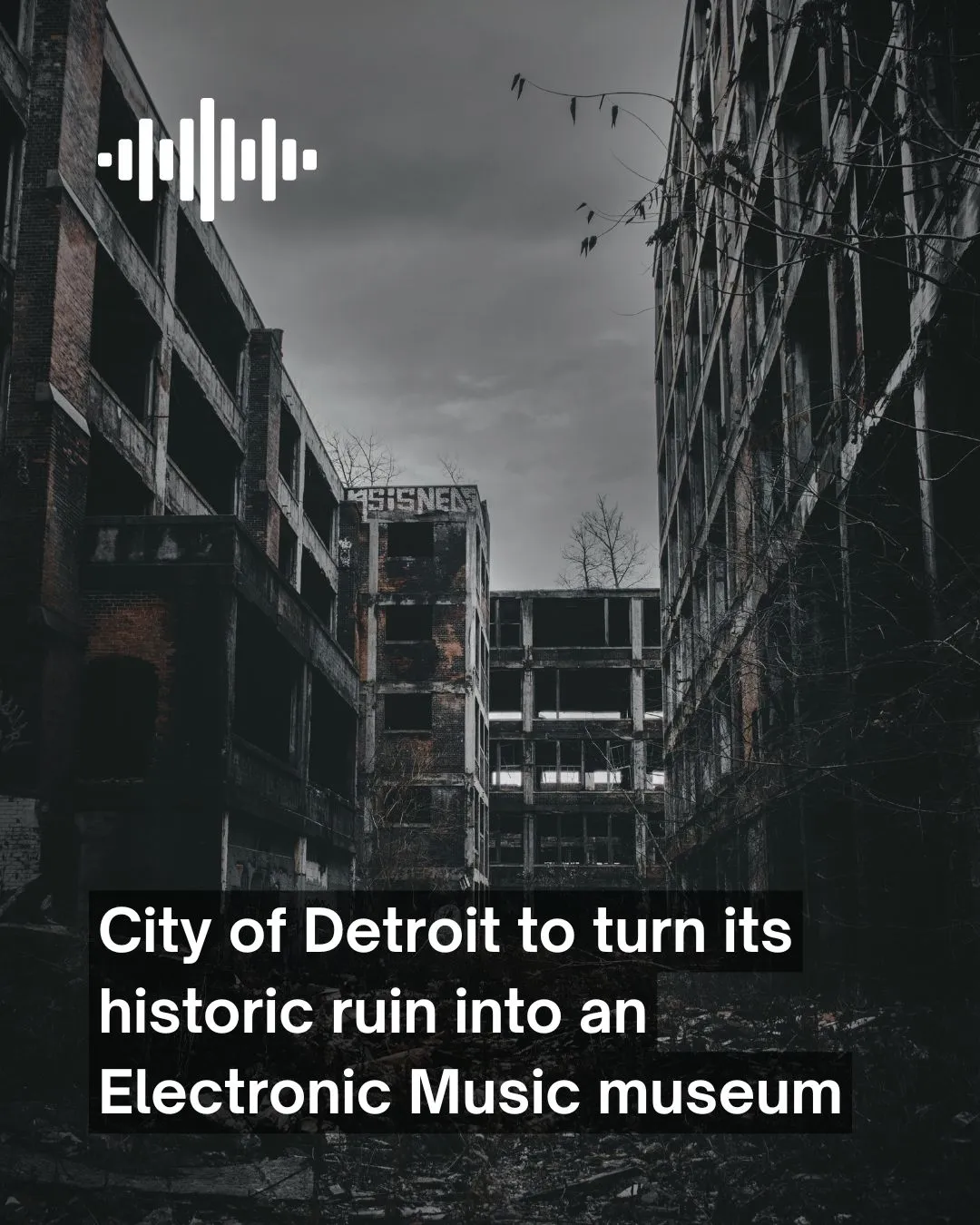
When it opened in 1903, the Packard Plant was considered the most modern automobile manufacturing plant in the world. Designed by the renowned Detroit-based architect Albert Kahn, it produced cars for a luxury car brand called Packard, which rivalled the likes of Cadillac in its notariety before World War 2.
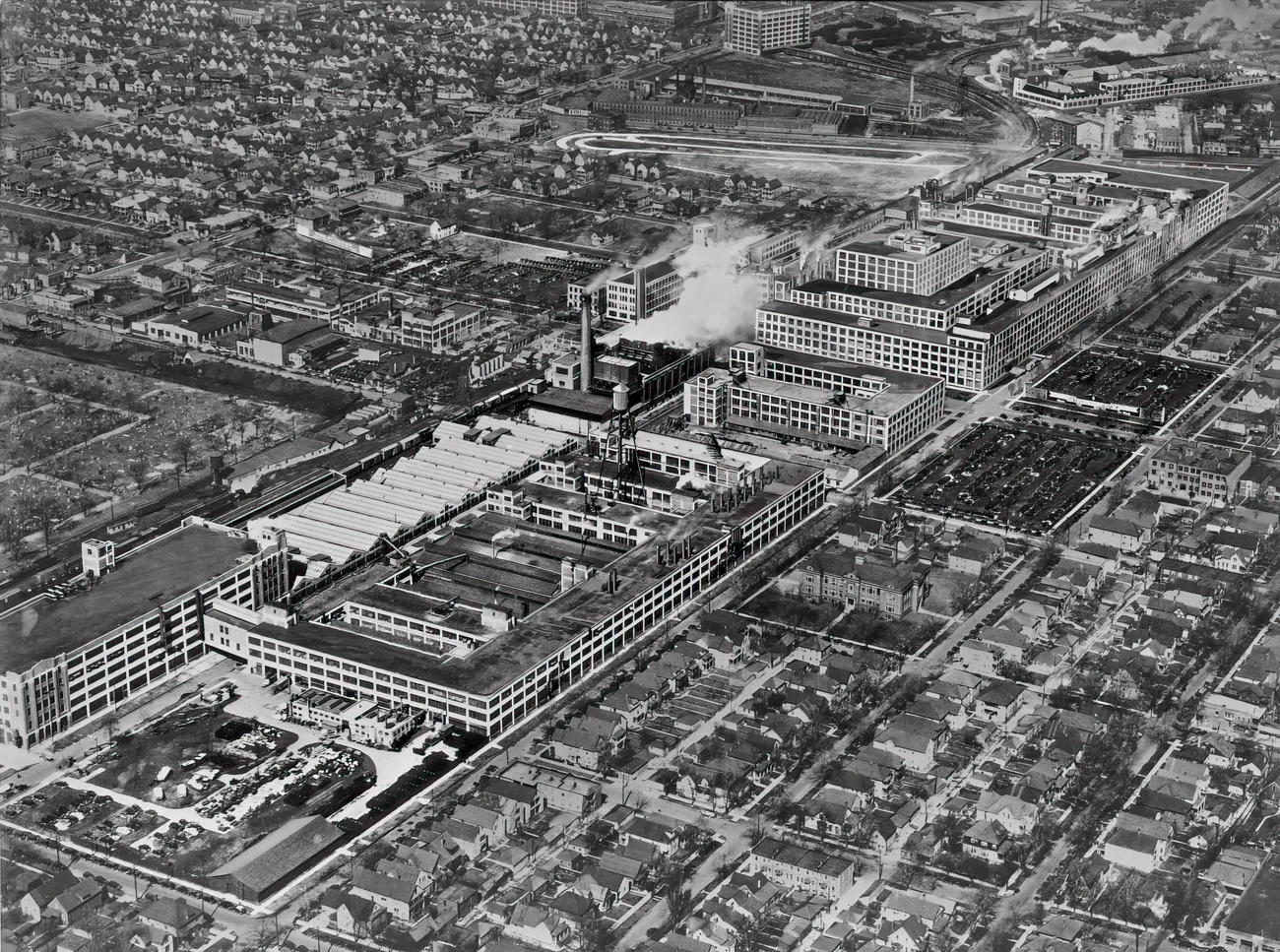
Aerial view of the Packard Plant (1937)
This huge complex, located on the east side of Detroit, is now a ruin. As Packard-as-a-brand struggled to survive as an independent automaker, the plant slowly downgraded until its complete shutdown in 1958. Since then, the complex slowly degraded into a ruin, which due to its sheer size became the most iconic symbol of Detroit’s industrial decline.
Techno’s Detroit origins
Following World War 2, several state and federal policies encouraged “white flight” to the suburbs, which caused a huge drop in Detroit’s population, from 1.8 million at its peak in the ’50s to half of that by the turn of the century. This, along with the resistance to change during the Civil Rights Movement era in the 1960s and huge deindustrialization in the 1970s led to widespread poverty in Detroit.
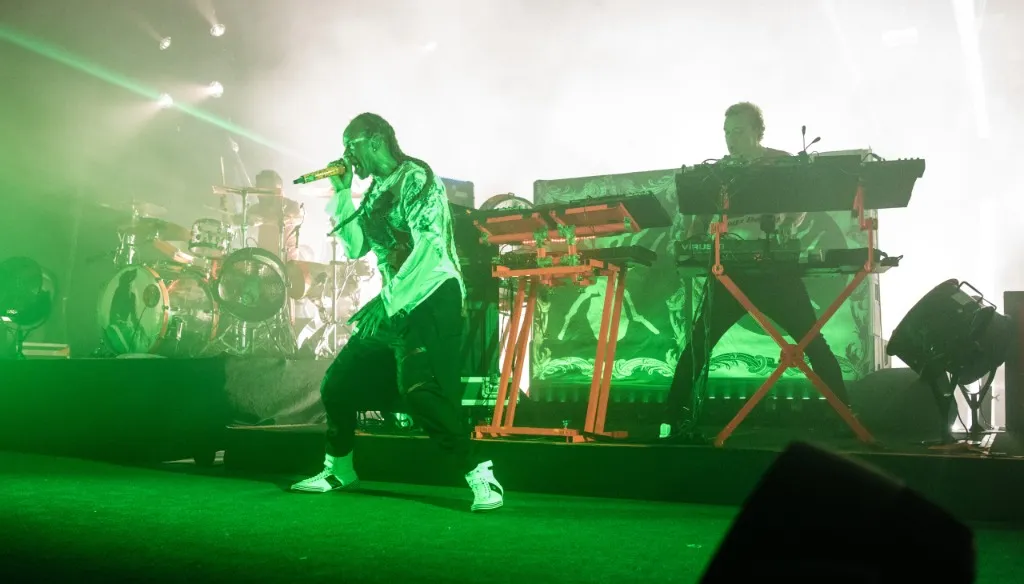
Detroit, once an industrial heavyweight of the United States, slowly but surely became known as a failed town, with widespread poverty and crime. These dire economic circumstances also led to creativity among its residents, and while many would associate the German band Kraftwerk as the first proper techno band, it is Detroit that shaped its history. More specifically, it was a trio of friends known as the Belleville Three, which included Juan Atkins, Derrick May and Kevin Saunderson. As Derrick May would put it:
[Techno] music is just like Detroit, a complete mistake. It’s like George Clinton and Kraftwerk are stuck in an elevator with only a sequencer to keep them company.
Darker, gloomier, and more repetitive than its cousin genre from Chicago, techno perfectly captured the essence of the city in the 1980s, but it wasn’t particularly popular among its residents. As Marc Kinchen (also known as MK) would put it in the 1990: “There are millions of people in Detroit. I’d say about thirty of them have heard of techno.” This was about to change in the following decade.
Spastik events at the Packard Plant
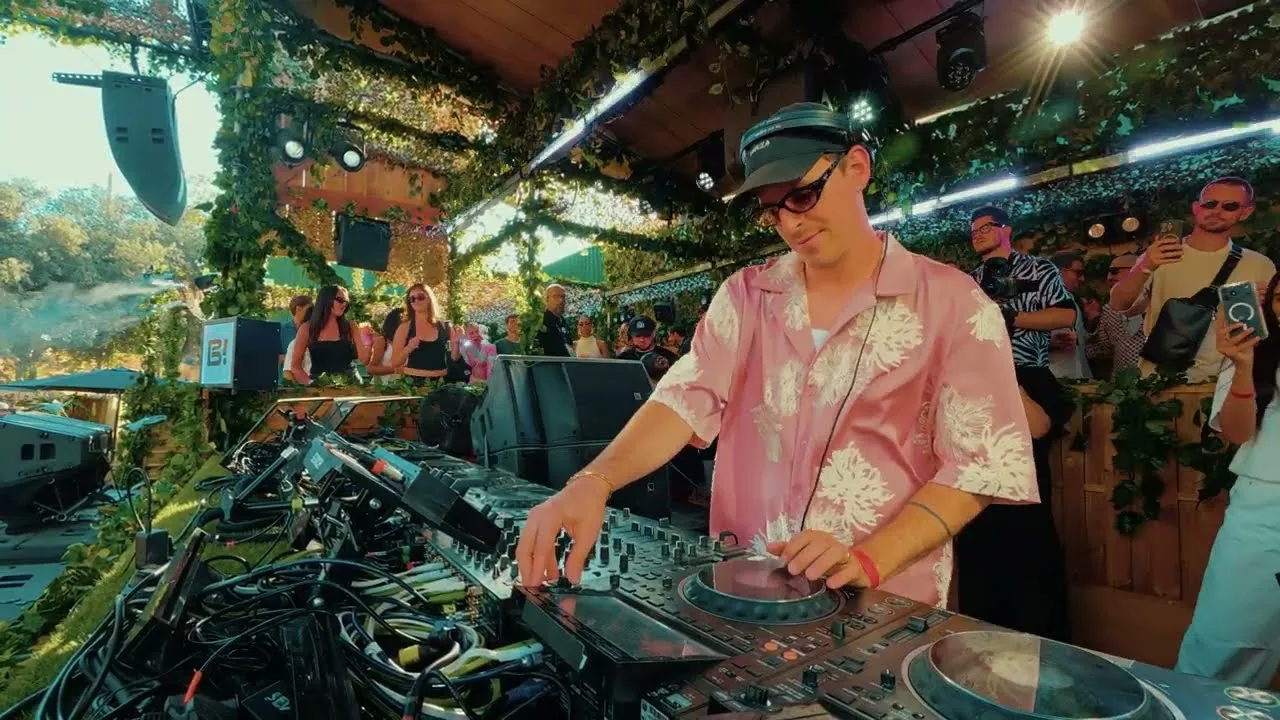
Richie Hawtin was a part of the generation that grew up listening to the sound of the Belleville Three. After gaining some notoriety in the early 1990s, most notably with his single ‘Spastik’ (1993) under his Plastikman alias, he started organising a series of illegal events at the Packard Plant.
The first of those events happened on the 13th of August, 1994, but many would follow. So, while he wasn’t a part of the original techno generation, he is the one that managed to ingrain Packard Plant into the history of the genre.
In July 2025, he released a short video that was inspired by that first rave.
Redevelopment plans
In recent years, the ruin slowly but surely got demolished, with only one building remaining. On December 1st, Detroit Mayor Mike Duggan announced that he has signed a letter of intent to redevelop that remaining building in the southern half of the complex, with an estimated cost north of $50 million. In cooperation with the Albert Kahn Legacy Foundation, this ruin will transform into a mixed-use centre featuring:
- 42 affordable housing units
- Detroit’s first indoor skate park
- More than two acres of indoor/outdoor public space and recreational areas
- Creative community programming areas
- MODEM - the Museum of Detroit Electronic Music
While not much is known about the museum specifically, its inclusion in this project is well-deserved. Once it opens, estimated to happen around 2029, it will undoubtedly become one of the most important ones of its kind.
A similar museum, both in name and purpose, already exists in Frankfurt: Museum of Modern Electronic Music (MOMEM).